

HIV AIDS
Latest News


December 9th 2025
A new rapid HIV test accurately differentiates vaccine-induced false positives from active HIV-1 infection, potentially improving diagnostics and vaccine trials.




More News


Comparative Effectiveness Research-Part 2: The Impact on Decision Making
April 16th 2010As publicly funded health care payment programs have grown over decades because of demographic shifts and expansion of coverage, comparative effectiveness research (CER) has emerged to address value in health care. The American Recovery and Reinvestment Act of 2008 (ARRA) included $1.1 billion for CER initiatives, and the new health care legislation created the Patient-Centered Outcomes Research Institute, which will be funded with $500 million or more annually. In these efforts exist the promise to create informed decisions that will improve health care at both the individual and population levels.
Update on the Therapy for Sporotrichosis
March 11th 2010Sporotrichosis is a fungal infection that typically results in cutaneous or lymphocutaneous disease, although other, more severe, life-threatening manifestations do occur. This article reviews updated treatment guidelines, which state that itraconazole has become the preferred therapy for most forms of infection. Amphotericin B remains the mainstay of treatment for severe cases, but lipid formulations are now preferred because of their more favorable toxicity profile. Also, fluconazole has been shown to be less effective than itraconazole and is no longer recommended except as an alternative for cutaneous and lymphocutaneous disease. [Drug Benefit Trends. 2010;22:49-52]
Global Focus: Reports From Physician-Volunteers Around the World
February 19th 2010As a screener and admissions committee member at our medical school (University of California School of Medicine at Davis), I am privileged to review the personal statements of many, many applicants who want to be doctors in spite of the recent hard times in our country that have led more than a few American physicians to believe that our profession is less valued and less desirable as a life work than it has been in the past.
Medicare to Cover HIV Screening Tests
February 18th 2010The list of covered preventive services for Medicare beneficiaries has expanded to include screening for HIV infection, according to the Centers for Medicare and Medicaid Services. This test will now be available to Medicare beneficiaries at increased risk for HIV infection, including women who are pregnant and any Medicare beneficiary of any age who requests testing.1
Fatigue, Weight Loss, and Dysphagia in an Older Man
December 11th 2009For 1 month, a 60-year-old white man has had increasing fatigue, generalized weakness, and exertional dyspnea. He becomes short of breath after he walks only 100 to 150 yards on level ground or climbs only 1 flight of stairs. In addition, he has unintentionally lost 12 lb in the past month and has experienced intermittent dysphagia with solid foods. He attributes this last symptom to long-standing gastroesophageal reflux disease (GERD), for which he regularly takes over-the-counter omeprazole.
Extrapulmonary Tuberculosis in Two Foreign-Born Patients
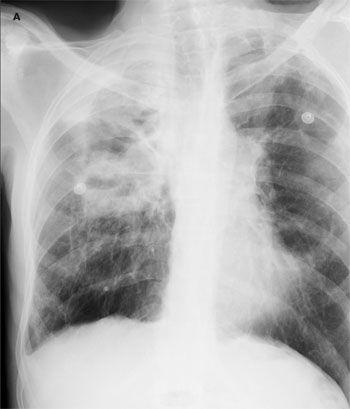
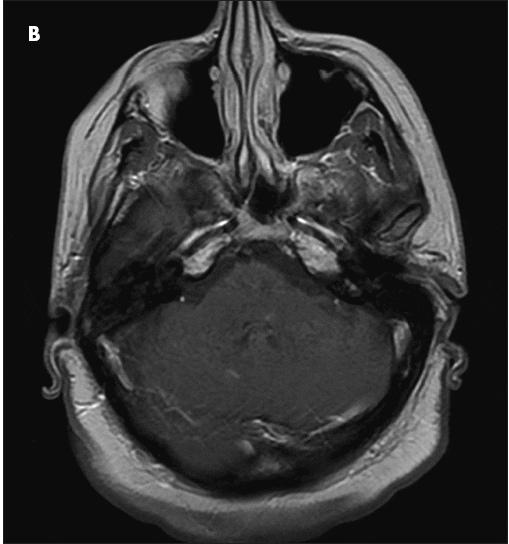
December 11th 2009Although the prevalence of tuberculosis (TB) in the United States continues to decline (from 2006 to 2007, the total number of TB cases declined 4.2%, from 13,779 cases to 13,293), the rate of decline has slowed in recent years.1 The rate in foreignborn persons is much higher than in US-born persons and appears to be increasing.1

Reader Feedback About "Cholesterol Mnemonic Aids Patient Education"
December 2nd 2009In response to the Practical Pointer "Cholesterol Mnemonic Aids Patient Education" (CONSULTANT, August 2008) about patients who have difficulty remembering the difference between HDL and LDL cholesterol, I use "H" is for happy and "L" is for lousy!
HIV Update From the 2009 International AIDS Society Conference-Cape Town, South Africa
November 23rd 2009The Fifth International AIDS Society Conference on HIV Pathogenesis, Treatment, and Prevention (IAS 2009) was held in Cape Town, South Africa, from July 19 to 22, 2009. More than 5500 delegates from more than 100 countries attended this annual event.
Part D in 2010: Fewer Plans, but Still Lots of Choice
November 10th 2009While the facts support the claim from the Centers for Medicare & Medicaid Services (CMS) that beneficiaries have “robust” choices in the sign-up period for 2010 Part D drug coverage plans that begins in November, the number of options available have continued to decline. At the peak in 2007, 1875 stand-alone Medicare drug plans were offered; this year, the number had shrunk to 1659, and the total for next year will be 1510.
What to Do for Patients With Hepatitis C?
November 3rd 2009No matter what primary care demographic your practice represents, it would be most unusual not to encounter patients infected with hepatitis C virus (HCV). Since HCV infection is chronic and can lead to cirrhosis (occurring in 20% of patients over a period of 10 to 20 years), decisions regarding its management, referral, and follow-up are of the utmost importance.
Twenty Years of “What’s Your Diagnosis?”
October 1st 2009What meaning resides in the series as a whole? To me, it embodies deep-seated belief and central practice: the primacy of time spent with the patient, gathering meaningful information and building the relationship that is often the most powerful therapeutic instrument we have. From the second year of medical school I planned to become a good physical examiner. I hungered for patient contact amidst a sterile curriculum. Also, I arrogantly, short-sightedly failed to see how the unpalatable basic science years formed a crucial, deep, and rational foundation for clinical understanding. Thirty-five years on, I have honed my skills. But daily I doubt some findings and interpretations; any clinician who is always sure is a fraud and a fool.
Travel Medicine: Emerging Pathogens and New Recommendations, Part 1
September 11th 2009More than half of travelers to the developing world experience a health-related problem during their trip, with 8% requiring medical attention on their return because of persistent symptoms. The GeoSentinel database, a collaborative effort among 31 travel medicine clinics on 6 different continents, suggests that the most common diagnoses in these persons continue to be malaria (24%), dengue fever (6%), acute traveler’s diarrhea (4%), and typhoid fever (2%).
HIV and Novel Influenza A (H1N1) Virus: A Call for Preparedness
August 2nd 2009Human infections with a novel influenza A (H1N1) virus were first identified in April 2009, with cases in the United States and Mexico. The epidemiology and clinical presentations of these infections are under investigation.

