December 22nd 2025
Abbott's Volt PFA System gains FDA approval, offering a new minimally invasive treatment for atrial fibrillation, enhancing patient care options.
December 15th 2025
Phase 3 results showed durable conversion benefits with a favorable safety profile, informing real-world management of acute PSVT outside of emergency settings.
November 24th 2025
Topline data show the factor XIa inhibitor cut ischemic stroke risk without increasing ISTH major bleeding, pointing to a possible new option for secondary prevention.
November 21st 2025
New research reveals that caffeinated coffee significantly reduces the recurrence of atrial fibrillation, challenging long-held medical advice.
November 12th 2025
Research reveals metformin's potential to enhance sinus rhythm stability post-ablation for AF in adults with obesity, independent of weight loss.
Management of AF Patients with Prior ICH – Race Specific Recommendations for High-Risk Patients
Results of a large Taiwanese registry analysis could open discussion around avoidance of oral anticoagulants in post-ICH patients.
Wine Health Quiz: 8 Vintage Questions
Research into wine’s health potency is ongoing. Get a tasting of the latest findings with this quick quiz.
Atypical Afib May Augur Poor Prognosis
A new study suggests a higher risk for poor outcomes in patients with atrial fibrillation who present in atypical fashion.
The CHA2DS2-VASc Score: Are All Components Equal?
The components may be equal on paper, but they may not be treated equally in clinical practice, according to new research.
10 New Wonders of Wine
Tonic or poison? Elixir or toxin? These slides offer a quick review of the latest findings on the health pros and cons of imbibing.
New Analyses Only Partly Defuse ROCKET-AF Trial Concerns
Critics continue to call for independent analysis by outside investigators not involved with the original trial.
Women with Atrial Fibrillation at Higher Cardiovascular Risk vs Men
The risk includes a 1.99X higher risk for stroke and 1.93X higher risk of CV mortality, according to new research.
Exercise with Atrial Fibrillation? Yes, in Moderation
Results of a Norwegian study add to the evidence that shows moderate aerobic exercise is appropriate in patients with symptomatic AF.
7 Modifiable Risk Factors for Atrial Fibrillation
Find data here on obesity, exercise, and OSA, plus 4 more factors that increase the risk for AF and other CV disease.
Risk of Atrial Fibrillation is Associated with Gout
A large population-based study found more patients already had atrial fibrillation at gout diagnosis compared with controls.
ROCKET-AF Trial Results Under Fire
Concern that equipment error may have led to higher doses of warfarin than necessary call the huge trial's findings into question.
To Bridge or Not To Bridge? Is it the Wrong Question?
Results of two recent studies suggest that perioperative "bridge" anticoagulation may do more harm than good in some patients.
Anticoagulant Use Among Afib Patients Wanes Over Time
Study results presented at the 2015 AHA meeting reinforce, once again, the critical role of persistent patient education on treatment adherence.
Risk of Atrial Fibrillation Increased in HFpEF
Data from a recent study suggest that paroxysmal AF may be underdiagnosed in patients with heart failure and preserved ejection fraction.
At Long Last, an Antidote for a NOAC!
The anticoagulant reversal agent idarucizumab was approved as the antidote to dabigatran via the FDA's accelerated approval program.
Atrial Fibrillation May Increase Risk of Dementia
Younger patients with AF of longer duration were found at higher risk for dementia, a recent study found.
Ablation Therapy for AF: Who, What is it Good For?
Guidelines recommend AF catheter ablation to help avoid use of oral anticoagulation. True or False? Answer this and 2 other queries on ablation.
Persistent AF Improved via LAA Isolation
Results of the BELIEF study presented at ESC 2015 suggest the adjunctive ablation procedure may enhance long-term rhythm control.
ESC '15: Real World Patients, Real World Numbers from GARFIELD-AF
The first results from the largest ongoing international registry of newly diagnosed AF patients were long awaited, and worth the wait.
3D Printing Technology in Cardiac Procedure Planning
What if you could test the fit and function of a cardiac device in an exact replica of your patient's heart and head off complications before you start?
Progression of Atrial Fibrillation: 3 Questions
Paroxysmal atrial fibrillation is a first and only dx for some patients; for others it is just the beginning. What do you know about AF progression?
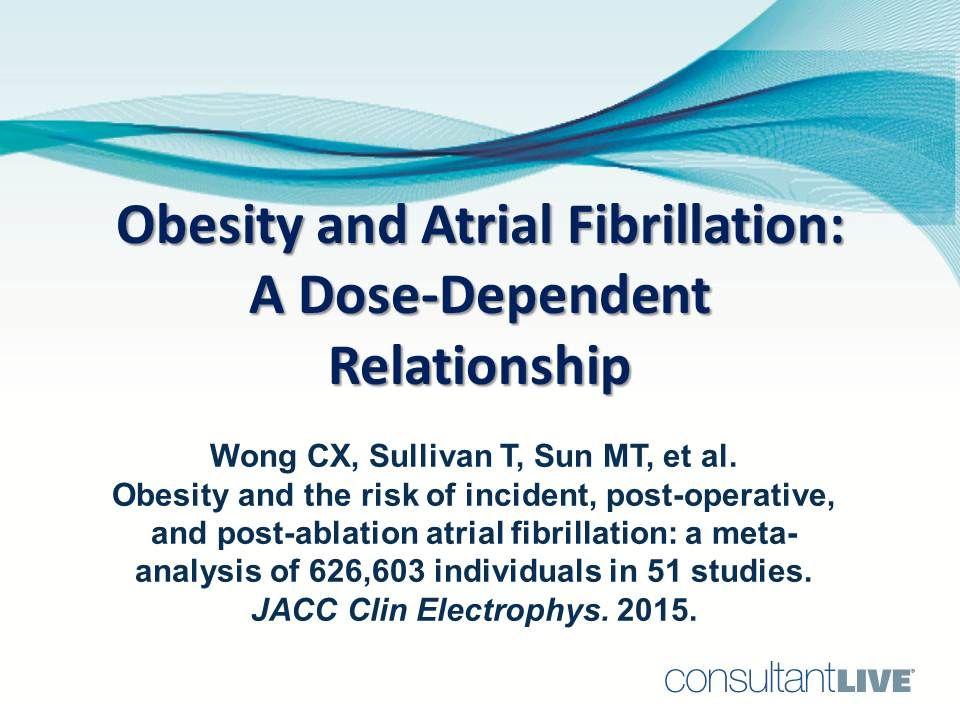
Obesity and AF: A Dose-dependent Relationship
A recent literature analysis found a 10% to 29% excess risk for AF conferred by incremental increases in BMI. The study in 9 slides, here.
Secondary AF: Risk of Recurrence Found in Framingham
Is new-onset AF linked to an acute precipitant less likely to recur than spontaneous AF? Is it any less dangerous? A new study finds answers in Framingham data.
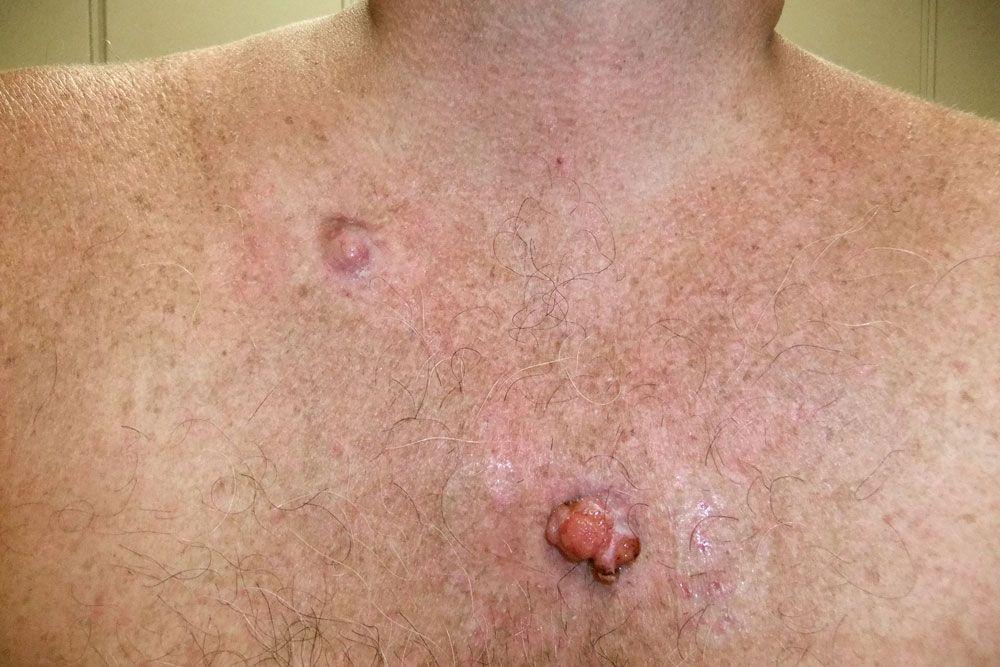
Lesions That Bleed With Minimal Trauma
Two lesions have been slowly expanding on an older man’s chest for 2 years. What is the problem? This and questions on 3 other topics in this quiz.
Gender Affects Exercise Tolerance in Atrial Fibrillation
Another Win for Uninterrupted Anticoagulation in the OR
There is a razor edge differential between pharmacologic thrombus prevention and risk for excessive bleeding during procedures for AF. More guidance from a new study.
Just Say No to Anticoagulation for These Patients With Atrial Fibrillation
Guidelines say “no” to anticoagulation for young, otherwise healthy persons with atrial fibrillation. New research finds that clinical practice looks quite different.
3 Myths About New Oral Anticoagulants Debunked for Primary Care Physicians
No monitoring necessary; don't use them before electrical cardioversion; and count them out for periprocedural use during AF ablation. Really?
To Ablate, or Not to Ablate? How Will You Answer the Question?
Ablation therapy may be an option for these two patients with heart disease. What is your recommendation? And, does the evidence support it?