

Atrial Fibrillation
Latest News


December 22nd 2025
Abbott's Volt PFA System gains FDA approval, offering a new minimally invasive treatment for atrial fibrillation, enhancing patient care options.


More News


Paroxysmal Events: Differentiating Epileptic Seizures From Nonepileptic Spells
October 2nd 2008It can be difficult to determine whether unusual, paroxysmal behavior represents a seizure or a nonepileptic event. Patients with sudden flailing movements or unresponsive staring may, in fact, be experiencing psychogenic events. Other types of pathological spells, such as syncope and migraine, can also be mistaken for epileptic seizures.
An Uncommon ECG Finding in a Man With Acute MI
October 1st 2008A 49-year-old man presented to the emergency department (ED) with substernal chest pain that had started an hour earlier. The pain radiated to the left arm, was constant, and was associated with diaphoresis, nausea, and dyspnea. A similar episode 4 days earlier had spontaneously resolved. He denied fever or chills, pleuritic chest pain, vomiting, and diarrhea.
Ischemic Stroke: Update on Prevention Part 2, The Role of Statins and Antiplatelet Agents
July 2nd 2008Selecting the most effective stroke prevention strategy for patients with cerebrovascular disease is an acknowledged challenge. In addition to decisions about the appropriateness of carotid surgery or angioplasty and stenting, there is the often tricky matter of designing the most effective medical regimen.
A Risk-Based Approach to the Care of Survivors of Childhood Cancer: 3 Case Studies
May 2nd 2008Survivors of childhood cancer frequently present to primary care practitioners for a routine physical examination or for urgent care. Knowledge of the patient's cancer history and of the specifics of the treatment are essential to providing proper care and addressing his or her unique risks.
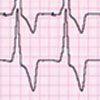
Right Bundle-Branch Block After Pacemaker Implantation
May 2nd 2008The morning after an 88-year-old woman with symptomatic second-degree type I (Wenckebach) atrioventricular block underwent placement of a dual chamber pacemaker without complication, she awoke with uncomfortable pulsations in her abdomen. The pacing thresholds and impedance had remained unchanged since implantation.
Sudden Deterioration Following Acute Myocardial Infarction
April 16th 2008Two days before a 72-year-old woman is admitted to the cardiac care unit (CCU), she had substernal discomfort she described as "heartburn," accompanied by episodes of nausea and vomiting. She attributed her symptoms to GI upset.
A Fast Beat Requires Closer Attention
April 2nd 2008I recommend obtaining an ECG in any older patient whose heart rate is more than 100 beats per minute on several occasions. Although it is easy to chalk up such findings to "nerves," "white coat phenomenon," or a morning cup of coffee, I have caught a few cases of asymptomatic atrial fibrillation this way.
Treatment of Sleep Apnea: To Cut May Not Always Be To Cure
March 2nd 2008How effective is upper airway surgery in treating obstructive sleep apnea? The fallout from the growing obesity epidemic includes obstructive sleep apnea (OSA) syndrome. Although OSA may be considered a "specialty disease" (managed by pulmonologists, sleep specialists, otolaryngologists, and bariatric surgeons), the primary care physician bears the brunt of providing ongoing care.
Stroke Prevention: Update on Antiplatelet Therapy
March 2nd 2008Each year about 700,000 Americans sustain a stroke, and about 29% of those patients who are aged 65 years or older die within 1 year. Worldwide, stroke is the third leading cause of death and the leading cause of severe disability in adults.
Systolic Hypertension: A Guide to Optimal Therapy
March 2nd 2008Systolic hypertension is an independent risk factor for coronary artery disease, stroke, and end-stage renal disease. Nonpharmacological interventions for systolic hypertension include limitation of dietary sodium and alcohol intake along with weight reduction and aerobic exercise.
Chronic Cough: Seeking the Cause and the Solution
February 1st 2008In the vast majority of nonsmokers who are not receiving angiotensin converting-enzyme inhibitors and who have no evidence of active disease on chest radiographs, chronic cough is caused by postnasal drip syndrome (recently renamed upper airway cough syndrome [UACS]), asthma, non-asthmatic eosinophilic bronchitis, or gastroesophageal reflux disease (GERD), alone or in combination.
A Middle-Aged Woman With MI, Stroke, and DVT
February 1st 2008A 57-year-old woman presents for follow-up several months after a series of thrombotic episodes. Four days after she underwent ankle fusion to relieve pain and edema associated with a leg fracture that had occurred 40 years earlier, she sustained a massive myocardial infarction (MI).
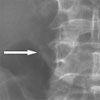
Ruptured Abdominal Aortic Aneurysm
February 1st 2008An obese 61-year-old man with a history of heroin abuse was brought to the hospital after he had fallen onto his buttocks on a sidewalk. He was able to stand initially, but weakness and numb-ness in his legs rendered him suddenly unable to walk or prevent himself from voiding. He denied abdominal or back pain. His medical history included asthma, chronic obstructive pulmonary disease, and hypertension.

