- Clinical Technology
- Adult Immunization
- Hepatology
- Pediatric Immunization
- Screening
- Psychiatry
- Allergy
- Women's Health
- Cardiology
- Pediatrics
- Dermatology
- Endocrinology
- Pain Management
- Gastroenterology
- Infectious Disease
- Obesity Medicine
- Rheumatology
- Nephrology
- Neurology
- Pulmonology
Suspect Skin Lesions-A Photo Quiz
Patients often present with skin lesions that are suggestive of skin cancer. Is it or isn’t it? This week’s photo quiz tests your knowledge of several possible cancerous presentations.
Question 1:
A 72-year-old man complained about an asymptomatic, gradually expanding “spot” on his forehead.

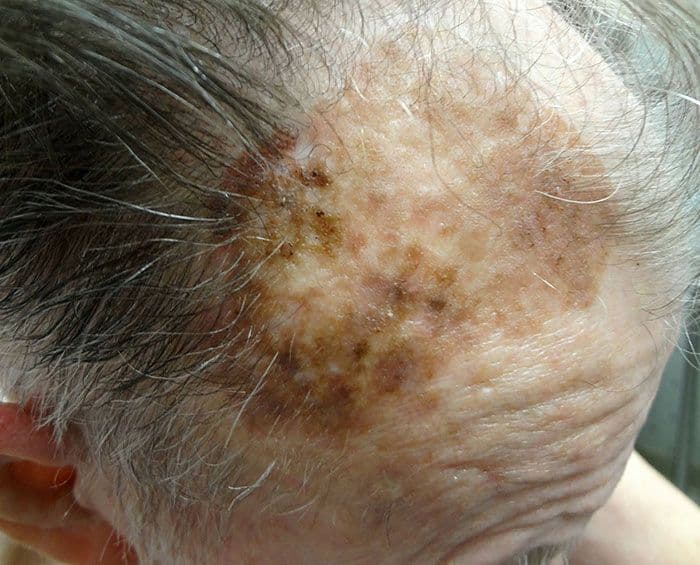
For the discussion, click here.
Click here for the next question.
For the answers, click here.
Question 2:
A 7-year-old African American girl presented with an asymptomatic gray lesion beneath her right eye that had appeared before her first birthday. She was a healthy child with macular gray discoloration on the right infraorbital skin. There was no abnormal pigment noted on the conjunctiva. She had nevus of Ota, also called oculodermal melanosis.



For the discussion, click here.
Click here for the next question.
For the answers, click here.
Question 3:
A 61-year-old obese, man with type 2 diabetes presented with the gradual onset of a mildly tender lesion on the dorsum of the right arm. He had a well-known history of actinic keratoses and multiple nonmelanoma skin cancers.

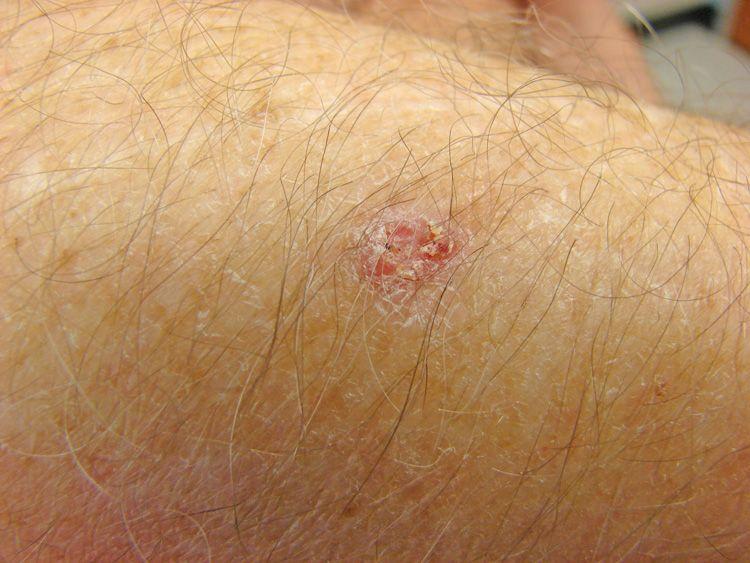
For the discussion, click here.
Click here for the next question.
For the answers, click here.
Question 4:
A 6-year-old boy had “redness and pain” of skin on his left upper abdomen. Physical examination revealed a large cluster of vesicles with underlying erythema and mild warmth. The lesion, present for 5 years, had been diagnosed as lymphangioma circumscriptum.

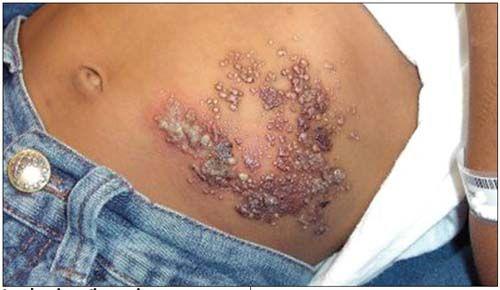
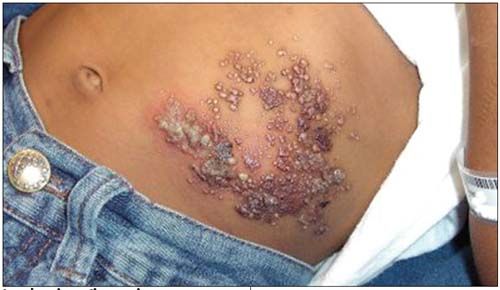
For the discussion, click here.
Click here for the next question.
For the answers, click here.
Question 5:
An 82-year-old man complained about an asymptomatic “spot” on his chest within which a darker area had recently developed. Physical examination revealed a large pigmented macule on the right upper chest. A darker area was eccentrically placed within the larger lesion. A biopsy revealed lentigo maligna melanoma, in-situ.

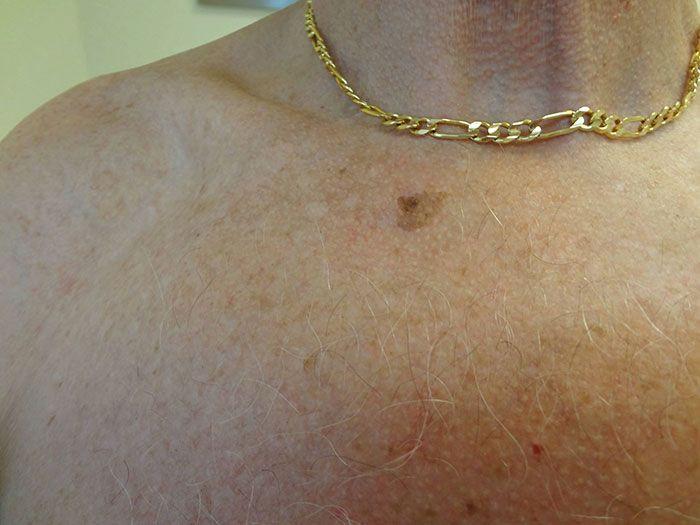
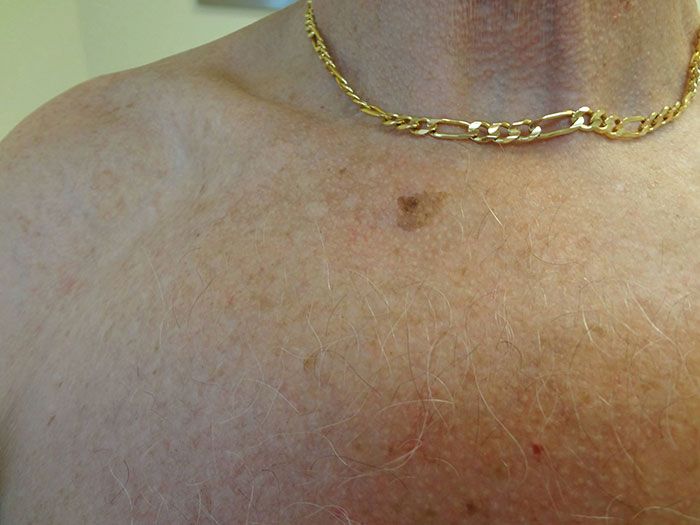
For the discussion, click here.
For the answers, click here.
ANSWER KEY:
Question 1. Answer: d
Question 2. Answer: e
Question 3. Answer: a
Question 4. Answer: c
Question 5. Answer: b


Kymera's Oral STAT6 Degrader KT-621 Shows Biologic-Like Activity in Early Atopic Dermatitis Trial
December 8th 2025KT-621 achieved deep STAT6 degradation and strong 4-week EASI and itch reductions, offering a potential new oral option for moderate–severe AD and other Th2 inflammation-driven disease.